Chimney Cap Installation in Rockford, IL
Updated
Short answer
What a chimney cap does
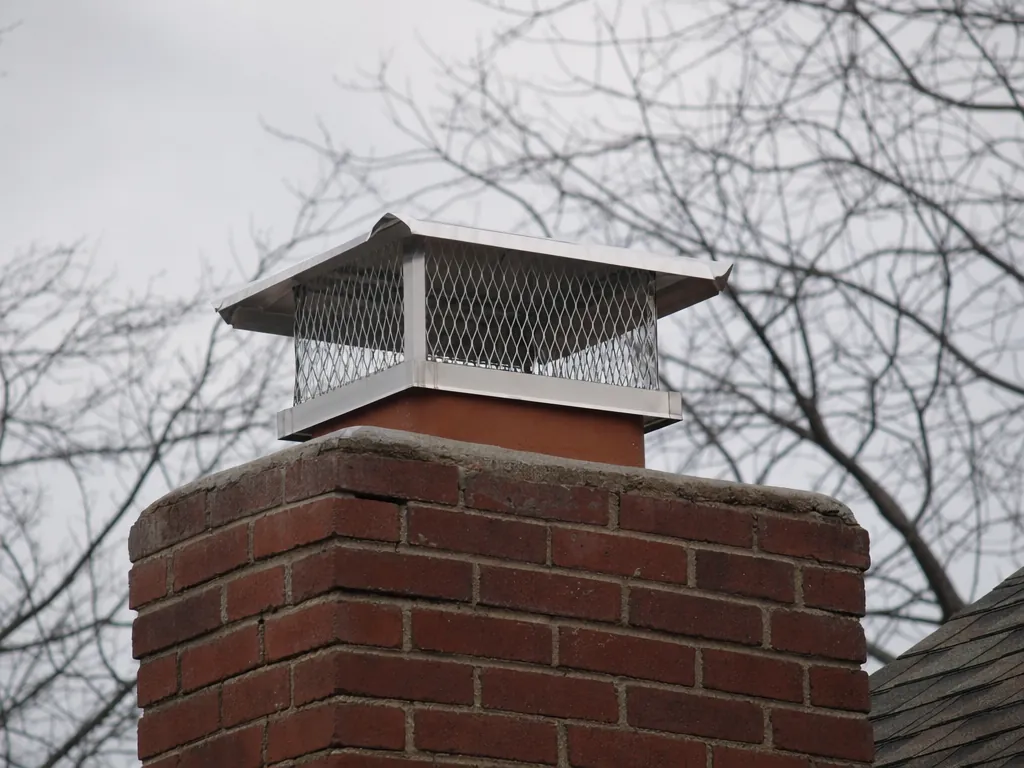
A cap sits over the top of a flue. Most are a mesh cage with a solid lid, mounted on the flue tile or the crown. They do four jobs: keep rain from pouring straight down the flue, stop birds and animals from getting in, catch sparks and embers before they land on the roof, and stop leaves and debris from piling up on the damper or in the flue. The cap guide explains each of these.
A cap is not the crown. The crown is the masonry slab under it, covered in the crown repair page.
Signs you need a new cap, or your first one
- The flue opens straight to the sky with nothing over it.
- The cap is rusted, bent, loose or missing mesh.
- There is water in the firebox after rain, or a rusted damper.
- You hear scratching, chirping or flapping inside the chimney. See animal removal.
- Leaves, sticks or nest material are in the firebox.
- A framed chimney has a flat metal top that is rusted or sagging. That part is a chase cover.
Types of cap
Single-flue and multi-flue
A single-flue cap covers one liner. A multi-flue cap or a large custom cover spans a crown that holds several flues. If the house has a fireplace flue and a furnace flue in one chimney, ask which is being covered and whether each opening gets its own protection.
Materials
Galvanized steel is the cheapest and rusts first. Stainless steel is the common choice because it resists rust. Copper is the most expensive and ages to a green patina. Angi, chimney cap cost (updated April 6, 2026) says custom copper can push a cap to the top of its range.
Spark arrestors
The mesh on the sides of a cap is a spark arrestor. Wood-burning fireplaces and stoves need it most. Mesh with openings too small can clog with soot, so a cap on a wood-burning flue needs cleaning. A cap on a gas flue that only carries furnace exhaust has less to catch, but it still keeps out animals and rain.
Chase covers
Many houses have a framed chimney clad in siding or stone veneer. These have a flat metal top called a chase cover instead of a masonry crown. No cost guide we reviewed prices a chase cover on its own, so get that as a written quote with the size and metal named.
How a cap is installed
- The technician measures the flue tile or the liner opening, since the cap has to fit it.
- The old cap, if there is one, is removed and the top of the flue is checked for cracks.
- A cap that clamps to the flue tile or screws to a liner is mounted. A cap for a crown is anchored to it.
- The seal where the cap meets the crown is checked, because that is where water gets in.
- The cap is checked for fit and for the clearance that lets the flue draw.
It is a short job if the roof is reachable and the crown is sound. A cracked crown or damaged flue tile adds work.
What to expect on the day
Most cap jobs are quick when the roof is dry and the crown is sound. The technician measures, removes the old cap if there is one, fits the new one, checks the seal and the flue, and shows you photos of the finished top. If something turns up, such as a cracked flue tile or a failing crown, you should hear about it before the cap goes on. Ask for the photos either way.
What a cap costs
Typical price, national
- Cap, installed: $190 to $650. Angi, chimney cap cost, updated April 6, 2026.
- Cap, installed: $200 to $850. HomeGuide, chimney cap cost, updated February 9, 2026.
No cost guide we reviewed prices a chase cover on its own, so get that as a written quote.
Angi, chimney cap cost (updated April 6, 2026) prices an installed cap at $190 to $650, with an average of $300. HomeGuide, chimney cap cost (updated February 9, 2026) gives $200 to $850, and splits it into the cap alone at $50 to $500 and labor at $150 to $350. The spread comes from the metal, the number of flues, the size of the opening and how hard the roof is to work on. No cost guide publishes a Rockford, Chicago or Illinois chimney price (Angi's Chicago pages return 404, and HomeGuide and Thumbtack have none), so every range on this site is a national figure and is labelled that way. The cost page lists every job.
The Rockford angle
Winnebago County heats with gas: 83.5% of county homes, against 169 that heat with wood. So many chimneys here vent a furnace or water heater and have not carried a fire in years. They still need a cap. An uncovered flue takes rain, and a warm flue is an inviting place for a raccoon or a bird.
Timing matters. Chimney swifts nest and roost in masonry chimneys. They are protected by the federal Migratory Bird Treaty Act, so it is illegal to harm the birds, their eggs or their nests. The U.S. Fish and Wildlife Service says to do chimney work between September or October and March or April. The Illinois DNR says fall migration begins in September. A cap installed in winter keeps the swifts from moving in next summer. Read chimney swifts in your chimney before you cap a flue in summer.
Rockford's Property Standards require fuel-burning appliances to connect to an approved chimney or vent. A cap that blocks a flue, or sits too close to the flue opening to let exhaust out, is a problem. Make sure the cap is sized for the flue it serves. If your flue vents a gas appliance, ask whether a cap that restricts flow is acceptable.
Getting the size right
A cap has to fit the flue it covers. Flue tile comes round, square and rectangular, and the opening must be measured, not guessed. Some caps clamp to the flue tile. Others mount to the outside of the crown or the top course of brick and cover a wide opening. A cap that is too small leaves gaps. One that is too tight can choke the flue. Photos of the top with a tape measure in the frame help a quote, and the technician will confirm on the roof.
Caps on flues that vent gas appliances
Many Rockford chimneys carry exhaust from a gas furnace or water heater. A cap on that flue still keeps out rain and animals, but it must let the exhaust leave freely. Tell the installer what the flue serves. If the flue has a liner, the cap or top plate has to match the liner. Nicor Gas advises a yearly check of gas appliances, and that check is a good time to look at the top of the vent. See liner installation for how the liner and cap work together.
Looking after a cap
- Check it after storms and in spring. Loose screws and bent mesh are quick to fix.
- On a wood-burning flue, creosote can clog the mesh. A sweep cleans it, and a plugged cap makes a fireplace smoke.
- Rust on a galvanized cap spreads onto the crown and brick below. Replace it before it flakes onto the flue.
- A cap with a rusted-through lid still lets water in. Repair or replace.
A cap that is damaged is also a sign the crown below may be. The crown repair page covers that.
Questions to ask before you hire
- What metal is the cap, and how is it fastened to the flue or crown?
- What size mesh does it use, and will it clog on a wood-burning flue?
- Is the crown sound? Will you look at it while you are up there?
- Is the quote per flue or for the whole chimney?
- If the chimney has a chase cover, is that in the quote?
Send us the flue size if you know it, and photos of the top. We reply with a price first.
See also chimney inspection, leak repair and liner installation.
Sources: Angi, chimney cap cost; HomeGuide, chimney cap cost; U.S. Fish and Wildlife Service, chimney swifts; Illinois DNR, chimney swift; City of Rockford, Property Standards; U.S. Census Bureau, ACS 2020-2024 5-year, via Census Reporter
Where this is done
Chimney Caps and Chase Covers across Winnebago County. Each town page has its own local rules and numbers; the rest are on the service area page.
Common questions
Chimney Caps and Chase Covers: questions
How much does chimney cap installation cost?
Angi puts an installed chimney cap at $190 to $650, averaging $300. HomeGuide gives $200 to $850. These are national figures, since no Rockford price is published. The cost page lists the other chimney jobs.
Do I need a chimney cap?
Almost every chimney benefits from one. The cap keeps out rain, birds and animals, stops sparks leaving the flue and keeps debris out of the damper. A flue with no cap lets water run down into the firebox and the liner.
What is the difference between a chimney cap and a chimney crown?
The crown is the sloped masonry slab at the top of the stack. The cap is the metal or stone lid over the flue opening. They do different jobs, and a chimney can need either or both. The crown versus cap guide compares them.
What is a chase cover?
A chase cover is the flat metal top on a framed chimney, the kind clad in siding or veneer instead of brick. It does the crown's job on that kind of chimney. No cost guide we reviewed prices one on its own, so get a written quote.
What material is best for a chimney cap?
Stainless steel is the common choice because it resists rust. Galvanized steel costs less and rusts sooner. Copper costs the most and lasts. Angi notes custom copper pushes a cap to the high end of the range.
Can I install a chimney cap myself?
The cap itself may be simple to buy, but the work is on the roof, at the top of a flue, where a fall is the main risk. Measuring the flue wrongly gives a cap that does not seal. A pro also checks the crown and flue tile while the old cap is off.
When is the best time to cap a chimney in Illinois?
Between fall and spring. Chimney swifts nest and roost in chimneys in summer and are federally protected, and Illinois DNR says their fall migration begins in September. Capping before the swifts return keeps them out without harming them.
Related guides
Other services
Chimney Caps and Chase Covers in Winnebago County
Tell us what you burn, when the chimney was last swept and what you have noticed. We reply with a price first, and nothing starts until you agree to it.