Creosote Removal in Rockford, IL
Updated
Short answer
What creosote is
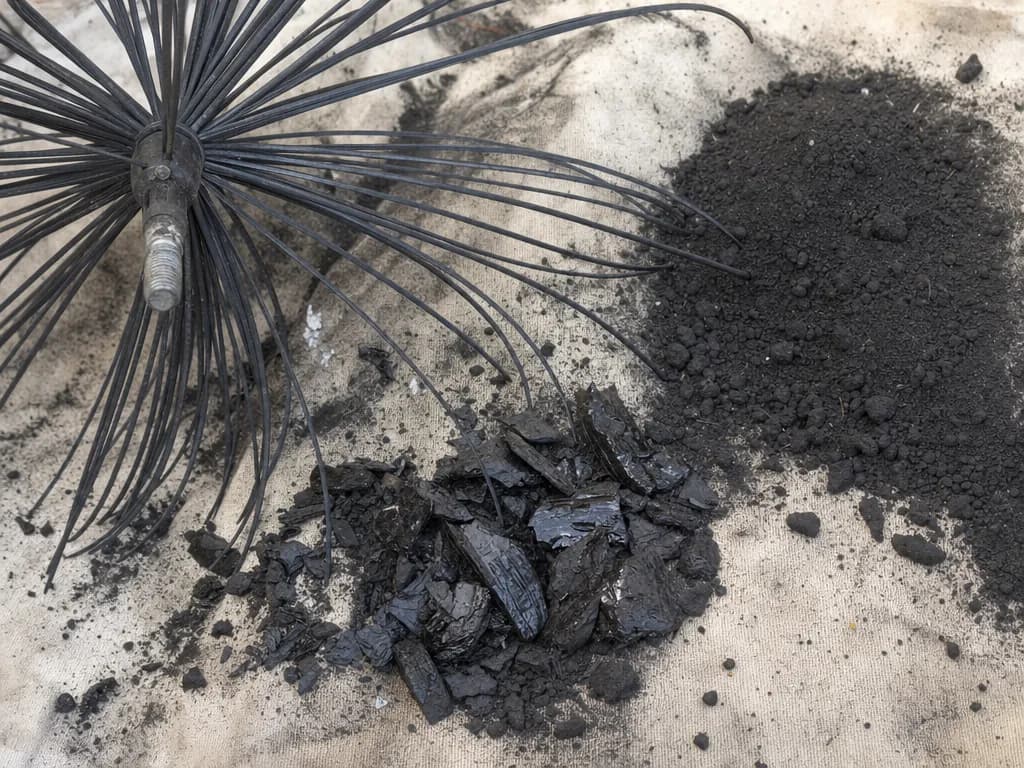
When wood burns, the smoke carries unburned gases and tar. As the smoke cools on the walls of the flue, it leaves a coating behind. That coating is creosote. It is flammable. A thin layer is a nuisance. A thick or hard layer is a fire hazard that can ignite from a hot fire and burn hot enough to damage the flue and the chimney.
Gas appliances do not make creosote. A flue that only vents a gas furnace or water heater has other problems, covered on the gas service and liner pages. This page is for wood: open fireplaces, stoves and inserts.
The three stages
Stage 1: soot and dust
A light, dry coating that brushes away easily. Normal wear from regular burning. A standard sweep clears it.
Stage 2: flaky, shiny deposits
A harder, black, flaking layer that a brush can remove, though it takes more effort and the right tools. It means the fires have been burning cool, or the wood has been wet.
Stage 3: glazed creosote
A hard, shiny, tar-like glaze stuck to the flue wall. It forms from long cooling and heavy buildup, and it does not brush off. It is the most flammable stage. It calls for specialized tools or treatments and a technician who knows the work. No approved cost guide prices glazed creosote on its own, so it is quoted after an inspection.
The creosote removal guide goes through how each stage is treated.
Why creosote matters
Dirty chimneys and heating fires
“According to the National Fire Protection Association, the leading factor contributing to home heating fires (30%) was mainly due to having a dirty chimney (i.e., creosote buildup).”
The EPA fact sheet is from 2016 and gives no data year, so read the 30% figure as NFPA's, passed on by EPA. The U.S. Fire Administration found 77% of residential heating fires in 2017 to 2019 were confined to chimneys, flues or fuel burners, and says heating fires peak in January. NFPA counts 44,210 home fires a year caused by heating equipment in 2016 to 2020, with about 480 civilian deaths a year.
Signs of heavy creosote or a chimney fire
- Black, shiny, tar-like drips or a hard glaze on the flue walls, seen with a flashlight or a camera.
- A strong, sharp smell from the fireplace, worse in humid weather.
- Flaky black bits in the firebox or on the cap.
- Slow, smoky fires and a flue that does not draw well.
- A chimney fire: a loud roar, a rumble like a train, dense smoke or flames from the top. Get everyone out and call 911.
After any chimney fire, do not use the fireplace until a Level 2 inspection has checked the flue. Fire can crack tiles and loosen mortar where you cannot see it. See signs of a chimney fire and chimney inspection.
How a pro removes creosote
- Drop cloths go down and the technician looks up the flue with a light or a camera to rate the stage.
- Stage 1 and most stage 2 are brushed out with a rotary or hand brush sized to the flue.
- The smoke shelf, the damper, the smoke chamber and the pipe get cleaned, since creosote collects there.
- For glaze, the technician uses a more aggressive tool or a treatment that breaks the glaze down. This takes more time and may be repeated.
- The flue is re-inspected. Heavy buildup may show damage that was hidden.
- You get the stage, the findings and advice on what caused it.
The DIY sweeping guide weighs doing it yourself.
What creosote removal costs
Typical price, national
- Chimney sweep: $129 to $381. Angi, chimney sweep cost, updated July 10, 2026.
No approved cost guide prices glazed (stage 3) creosote removal on its own; it is quoted after an inspection. No cost guide publishes a Rockford, Chicago or Illinois chimney price (Angi's Chicago pages return 404, and HomeGuide and Thumbtack have none), so every range on this site is a national figure and is labelled that way.
Angi, chimney sweep cost (updated July 10, 2026) puts a chimney sweep at $129 to $381, with an average of $254. HomeGuide, chimney sweep cost (updated February 9, 2026) gives $150 to $375. Thumbtack, chimney sweep cost (updated March 31, 2026) says $201 to $726, with most paying about $385. Those prices cover a normal cleaning. Heavy stage 2 and glazed buildup take longer, and a technician will quote it after the inspection. See the cost page for the other jobs.
Keep it from building up
- Burn dry wood. The EPA says wood burns best under 20 percent moisture and should be tested with a meter. Season wood at least six months.
- Never burn garbage, plastic or pressure-treated wood.
- Give the fire air. Damping a fire down overnight cools the smoke and leaves more behind.
- Burn smaller, hotter fires.
- Have the chimney inspected and cleaned every year. The U.S. Fire Administration, NFPA 211 and the Consumer Product Safety Commission all say so.
See the firewood guide for where to buy and how to store wood here.
The Rockford angle
Winnebago County is a gas county. 83.5% of homes heat with gas and only 169 with wood (Census ACS 5-year), so most chimneys here vent a furnace and carry no creosote. The ones that do are fireplaces and stoves that are lit a few times a winter, often with wood that was not seasoned. Rockford averages 21.8 F in January and 6,497 heating degree days a year (National Weather Service, 1991 to 2020 normals), and a fire lit on a cold night in a cold flue is the one that leaves the most deposit. With 22.4% of Rockford's housing units built before 1940 (Census ACS 5-year), many of those flues are large, uncovered and rough inside, so deposits stick.
What your fire tells you
You can read creosote risk without a camera. A fire that smolders, smokes and leaves black streaks on the glass or the firebox is running cool. Dark, oily smoke from the top of the chimney, or a heavy smell when the fireplace is cold, means deposits are building. A flue that draws poorly, or a cap with black crust, points the same way. Wet wood makes all of this worse. If you see these signs, get the flue checked, since the deposits form where you cannot see them.
Why stage 3 is the one to avoid
Each stage builds on the last. Soot catches smoke, smoke leaves more, and a cool flue lets the layer bake into glaze. The harder the layer, the harder it is to remove, and the more flammable it is. That is the case for a yearly sweep. Catching stage 1 and 2 is routine work at the $129 to $381 range Angi gives. Waiting until glaze forms turns a routine job into a specialized one with no published price.
What happens after the sweep
A sweep is a good time for a Level 1 or Level 2 check of the flue. Removing the deposits often shows damage that the buildup hid: cracked tile, open joints, a bent damper. A report with photos is worth asking for. If the technician advises a repair, you can take the written findings to another company for a second price. The inspection page covers what the levels include.
Quiet chimney fires
Not every chimney fire is the dramatic kind. Some burn slowly inside the flue and are noticed only by the damage they leave: cracked or warped tile, a discolored or puffy creosote surface, damage to the cap. If you see these, or you suspect a fire happened, stop using the fireplace and book a Level 2 inspection. See signs of a chimney fire.
Questions to ask before you hire
- What stage is the creosote, and can you show me on a camera?
- Is the price for a standard sweep or for heavy buildup? What if you find glaze?
- What tools or treatments do you use on glaze?
- Will you inspect the flue afterward and give me the findings in writing?
- After a chimney fire, do you do a Level 2 inspection?
Tell us what you burn, how often and what you have seen. We reply with a price first.
Sources: Angi, chimney sweep cost; HomeGuide, chimney sweep cost; Thumbtack, chimney sweep cost; EPA Burn Wise, fast facts (2016, citing NFPA); U.S. Fire Administration, residential heating fires 2017-2019; U.S. Fire Administration, fireplace and wood stove safety card (PDF); NFPA, Home Heating Fires (2016-2020 data); NFPA 211 (2016 edition), Sec. 14.2 annual inspection; CPSC, home heating equipment and carbon monoxide; EPA Burn Wise, best wood-burning practices; EPA Burn Wise, what you can do (historic record since Oct 30, 2025); Nicor Gas, safety precautions; National Weather Service, Rockford normals 1991-2020; U.S. Census Bureau, ACS 2020-2024 5-year, via Census Reporter
Where this is done
Creosote Removal across Winnebago County. Each town page has its own local rules and numbers; the rest are on the service area page.
Common questions
Creosote Removal: questions
How much does creosote removal cost?
Angi puts a chimney sweep at $129 to $381, averaging $254. No approved cost guide prices glazed, third-stage creosote, so that is quoted after an inspection. These are national figures with no Rockford price. See the cost page.
What are the three stages of creosote?
Stage 1 is a light, dry soot that brushes away. Stage 2 is a flaky, shiny black layer that takes more effort and the right brush. Stage 3 is a hard, glazed tar that does not brush off and needs specialized tools or treatments.
How do I remove glazed creosote?
A technician uses stronger tools or a treatment that breaks the glaze down, often in more than one pass. It is the most flammable stage, so it is not a job for a household brush. An inspection first shows how far the glaze runs.
What causes creosote buildup in a chimney?
Smoke cooling on the flue wall. Wet or unseasoned wood, smoldering fires, a cold flue and a flue that is too large all make it worse. Burning dry wood in hotter fires leaves less behind.
How often should a chimney be cleaned of creosote?
At least once a year, according to the U.S. Fire Administration and NFPA 211, and more often with heavy use. EPA, citing NFPA, names a dirty chimney as the leading factor in home heating fires.
What should I do after a chimney fire?
Do not use the fireplace until a Level 2 inspection has checked the flue. A chimney fire can crack tiles and loosen mortar out of sight. The signs of a chimney fire guide explains what to look for and what to do.
Do gas fireplaces and furnaces make creosote?
Gas does not leave creosote. A gas flue still needs a check for blockage, damage and condensation, and Nicor Gas advises a yearly look. Creosote comes from wood burned in a fireplace, stove or insert.
Other services
Creosote Removal in Winnebago County
Tell us what you burn, when the chimney was last swept and what you have noticed. We reply with a price first, and nothing starts until you agree to it.