How to remove creosote from a chimney
Updated
Short answer
Part of Creosote Removal.
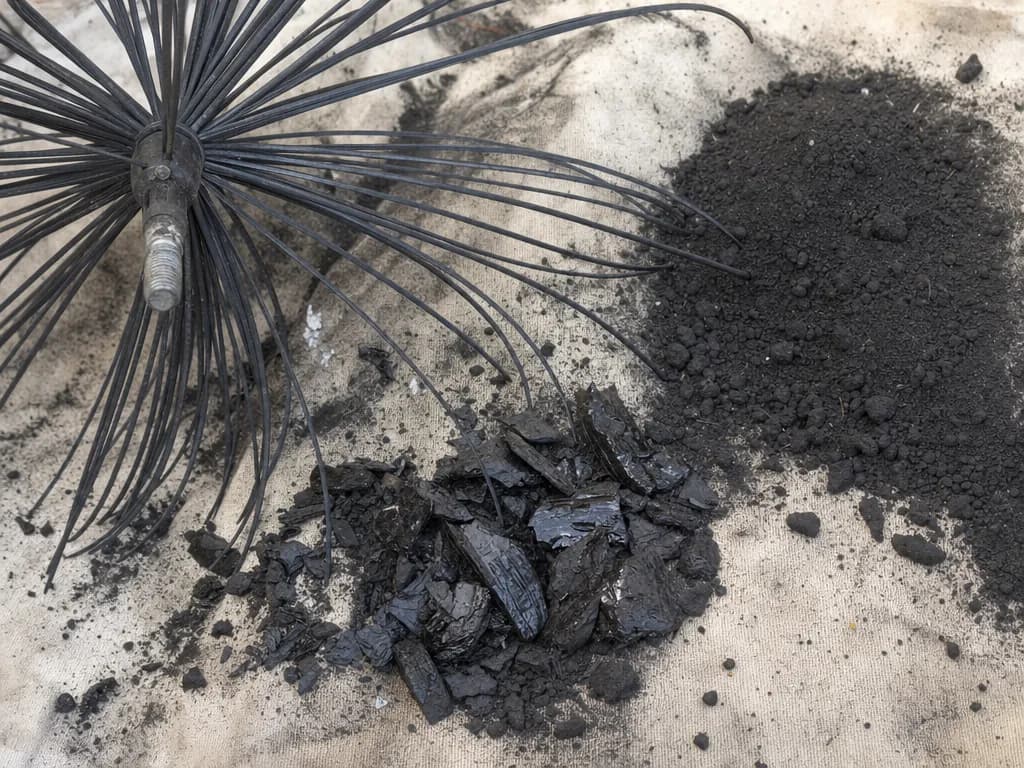
Creosote is what wood smoke leaves on the inside of a flue. It is the main reason a wood-burning chimney needs cleaning. The creosote removal service page covers booking the work; this guide explains what the work is.
Why it matters
EPA Burn Wise, citing NFPA
“According to the National Fire Protection Association, the leading factor contributing to home heating fires (30%) was mainly due to having a dirty chimney (i.e., creosote buildup).”
That fact sheet is from 2016 and does not give its data year, so cite it as NFPA, via EPA, and read it as a general finding, not a current count. The share it gives is 30%. The direction is clear: NFPA and EPA both treat creosote as the thing to keep under control.
The three stages
Sweeps describe creosote by how it looks and how hard it is to remove.
- Stage 1: soot. Loose and dusty. A brush takes it out. This is what a normal yearly sweep removes.
- Stage 2: flaky or hardened buildup. It sticks to the flue and does not brush off in one pass. A sweep needs stiffer tools and more time.
- Stage 3: glazed. A hard, shiny, tar-like coating. It burns hot if it ignites and is the hardest to remove.
The tools vary by sweep and by flue type. A stainless liner and a clay tile liner are not cleaned the same way, so ask what will be used on yours.
What removal costs
A standard sweep covers soot and, usually, flaky buildup. Angi puts a sweep at $129 to $381 (Angi, chimney sweep cost, national, updated July 10, 2026) and HomeGuide at $150 to $375 (HomeGuide, chimney sweep cost, national, updated February 9, 2026). No approved cost guide prices glazed stage 3 creosote removal on its own. It is quoted after an inspection, and the inspector may want a camera look first (Level 2, $260 to $460 (Angi, chimney sweep cost, national, updated July 10, 2026)). All published ranges are on the chimney cost page; glazed creosote is the one entry without a range.
Do creosote removal products work?
Chemical treatments and logs are sold for creosote. We found no independent test among the sources used on this site, so this guide does not rate them. If one is used, it does not replace the yearly inspection. NFPA 211 still asks for an inspection every year, and a product cannot show whether the liner is cracked.
Stopping it from coming back
The thing an owner controls is the wood.
EPA Burn Wise
“Wood burns best at a moisture content of less than 20 percent. Test wood with a wood moisture meter before you burn it.”
EPA also says to season wood at least six months and store it off the ground with only the top covered, and never to burn garbage, plastic or pressure-treated wood. Burn Wise stopped updating on October 30, 2025, and EPA keeps it as a historic record. For where to buy wood locally, see seasoned firewood in Winnebago County.
Gas heat does not make creosote
83.5% of Winnebago County homes heat with gas, and only 169 homes heat with wood (Census ACS, 2020 to 2024). In a house that burns only gas, creosote is not the issue. The flue still needs inspecting, for other reasons, covered in the furnace and water heater liner guide.
Can I remove it myself?
Some owners do. A brush can remove stage 1 soot from an accessible flue. It cannot show you the liner condition, and if you find a shiny, hard coating, stop and call for an inspection. The DIY sweeping guide covers what a homeowner can and cannot see.
After a chimney fire
If creosote has ignited, do not use the chimney again until a Level 2 inspection clears it. See the signs of a chimney fire.
Sources: EPA Burn Wise, fast facts (2016, citing NFPA); EPA Burn Wise, best wood-burning practices; EPA Burn Wise, what you can do (historic record since Oct 30, 2025); NFPA 211 (2016 edition), Sec. 14.2 annual inspection; Angi, chimney sweep cost; HomeGuide, chimney sweep cost; Nicor Gas, safety precautions; U.S. Census Bureau, ACS 2020-2024 5-year, via Census Reporter
Quick answers
What is the best way to remove creosote from a chimney?
A sweep with the right brush for your flue type removes soot and flaky buildup. Glazed creosote needs an inspection first and a quote. The cost page shows the published sweep ranges and notes that glazed removal has no published price.
Does chimney sweeping remove creosote?
Sweeping removes soot and most flaky buildup. Glazed, tar-like creosote is harder and may need extra work. The inspector decides what the flue needs.
How do I know what stage of creosote I have?
By looking: loose soot is stage 1, hard flaky buildup is stage 2, and a shiny, tar-like glaze is stage 3. A sweep or inspector can tell, and a camera helps with the upper flue.
Does burning dry wood reduce creosote?
EPA Burn Wise says wood burns best at under 20 percent moisture, tested with a meter, and should be seasoned at least six months. Dry wood is the main thing an owner controls.
Can gas fireplaces get creosote?
Creosote comes from burning wood, so gas appliances leave little. Gas vents still need a yearly inspection for blockages, cracks and poor combustion, as Nicor Gas advises.
Chimney due for a look?
Tell us what you burn, when the chimney was last swept and anything you have noticed. We reply with a price first.