Is it worth sweeping your own chimney?
Updated
Short answer
Part of Creosote Removal.
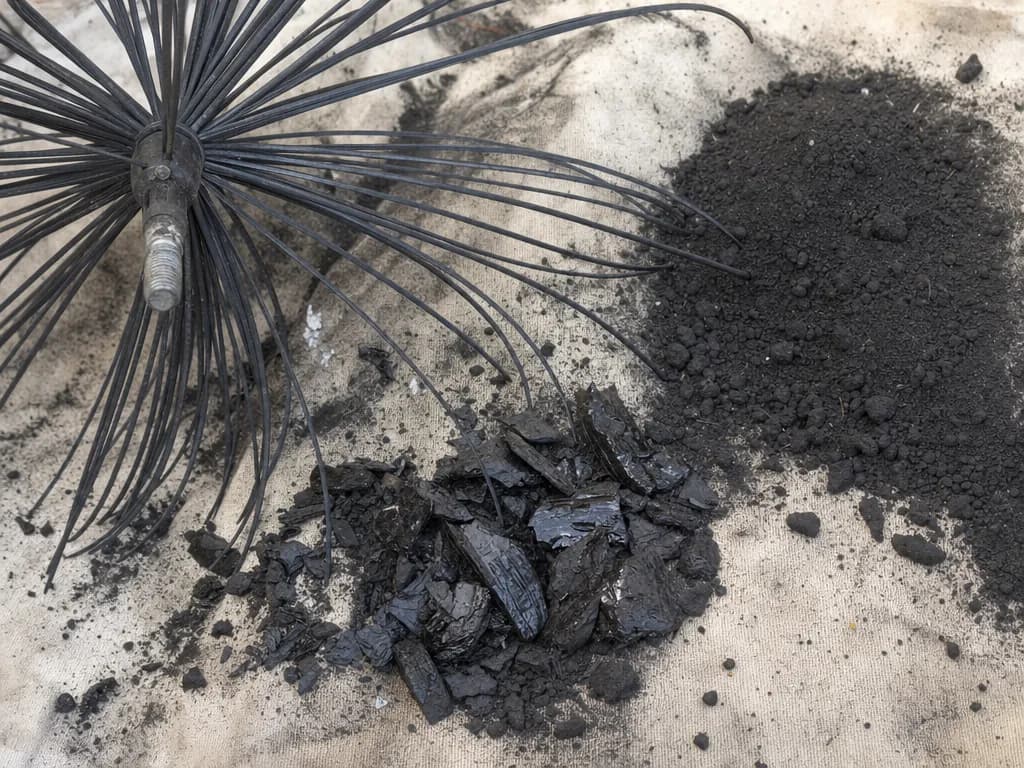
People do sweep their own chimneys. Kits with rods and brushes are sold widely, and the search for them is common. No one is doing anything wrong by trying. The question is what a kit gets you and what it leaves undone, so you can decide with the facts. When you want the inspection or the heavy cleaning done for you, see the creosote removal service page.
What a homeowner can do
- Brush loose soot and stage 1 creosote out of an accessible, straight wood flue.
- Clear the firebox and ash, using a lidded metal container kept at least 10 feet from the house (U.S. Fire Administration).
- Look with a flashlight: the firebox, the damper, and the smoke chamber if you can reach it.
- From the ground, check the cap, the crown and the mortar joints for obvious cracks, and watch for stains inside the house.
We did not find a sourced price for DIY kits, so no kit price is given here. The comparison is a sweep, which Angi prices at $129 to $381 (Angi, chimney sweep cost, national, updated July 10, 2026) and HomeGuide at $150 to $375 (HomeGuide, chimney sweep cost, national, updated February 9, 2026). A kit may pay for itself in a year or two for someone who sweeps regularly. The ranges are on the chimney cost page.
What a homeowner cannot see
A flashlight shows the first few feet. It does not show cracked tile higher in the flue, gaps between liner sections, a liner that has shifted, or damage on the far side of the flue wall. The only way to see those without taking the chimney apart is a video scan.
CSIA on Level 2
“A Level Two inspection is recommended when the conditions of use are changing, such as adding a new appliance, or replacing an existing appliance with a dissimilar one (different fuel, efficiency or type)”
That camera scan is part of a Level 2 inspection. No kit includes it. A sweep with a camera or a Level 2 visit adds that view, for a national range of $260 to $460 (Angi, chimney sweep cost, national, updated July 10, 2026).
The annual inspection rule
NFPA 211 (2016 edition)
“Chimneys, fireplaces, and vents shall be inspected at least once a year in accordance with the requirements of Section 15.2. ... Cleaning, maintenance, and repairs shall be done if necessary.”
The rule is to inspect every year, and clean if necessary. An owner who brushes the flue has done the cleaning half. The inspection half asks for more than a flashlight, especially in an old house. A middle path some owners take is to brush the flue themselves and pay for a yearly Level 1 or Level 2 look. That keeps the inspection and drops the cleaning cost.
Where DIY is a poor fit
- A flue that vents a furnace or water heater. Nicor Gas advises a yearly cleaning or inspection of gas appliances by a certified contractor. 83.5% of Winnebago County homes heat with gas, and in an old Rockford house that exhaust often passes through the masonry chimney. A crack there is a carbon monoxide risk. Leave this to a pro.
- Glazed, shiny creosote. If a brush does not move it, stop. It is stage 3, and no cost guide publishes a price for removing it; it is quoted after an inspection.
- Any chimney after a fire or a long gap. See signs of a chimney fire.
- A roof you are not comfortable on. A fall costs more than a sweep.
- Summer. Chimney swifts are protected by federal law and use chimneys through the warm months, so DIY sweeping has the same October to March window as a pro's. See the swifts guide.
Safety
Sweep only when the fireplace or stove is cold. Cover the opening and wear eye and breathing protection, since soot and creosote dust are irritants. Do not burn garbage, plastic or pressure-treated wood, which EPA says produce harmful chemicals. Keep a working carbon monoxide alarm within 15 feet of every sleeping room, as Illinois law requires for homes that burn fossil fuel; see the CO alarm law.
A fair verdict
DIY is worth it for a straight, accessible wood flue where you are comfortable and you add a professional inspection. It is a poor swap for the yearly inspection itself, and a poor idea for a gas appliance flue. Read how to remove creosote for the stages, and how often to sweep for the schedule.
Sources: NFPA 211 (2016 edition), Sec. 14.2 annual inspection; CSIA, Level 2 inspection guide (PDF); CSIA, chimney inspection levels; U.S. Fire Administration, fireplace and wood stove safety card (PDF); Nicor Gas, safety precautions; EPA Burn Wise, what you can do (historic record since Oct 30, 2025); Carbon Monoxide Alarm Detector Act, 430 ILCS 135/10; U.S. Fish and Wildlife Service, chimney swifts; Angi, chimney sweep cost; HomeGuide, chimney sweep cost; U.S. Census Bureau, ACS 2020-2024 5-year, via Census Reporter
Quick answers
Is it worth sweeping your own chimney?
For an accessible wood flue, a kit can save money. It cannot replace the yearly inspection or show a cracked liner. Compare it with the sweep ranges on the cost page.
Can I clean my chimney myself?
Many owners do with a rod and brush kit. Loose soot comes out; the liner's condition stays unseen. Stop and call a pro if you find a hard, shiny coating.
What can't I see when I sweep my own chimney?
Cracked or missing liner sections, gaps between tiles and damage inside the flue wall. A video scan, part of a Level 2 inspection, is the only way to see those without opening the chimney.
Is it safe to sweep a gas furnace chimney myself?
It is better left to a professional. Nicor Gas advises a yearly cleaning or inspection by a certified contractor, and a damaged flue can let carbon monoxide into the home.
When should a DIY sweeping be done?
October to March. Chimney swifts are protected by federal law and may be in the chimney through summer, so a warm-weather sweep risks harming them.
Chimney due for a look?
Tell us what you burn, when the chimney was last swept and anything you have noticed. We reply with a price first.