Chimney sweep vs chimney inspection: the difference
Updated
Short answer
Part of Chimney Inspections.
People search for “sweep” and “cleaning” as if they were two services. They are one job under two names. The real difference is between cleaning and inspecting. Cleaning takes material out of the flue. Inspecting finds out what shape the flue, the masonry and the connected appliance are in. You can have either without the other, and the national standard asks for the inspection every year. The chimney inspection service page covers the inspection side.
What a sweep does
A sweep cleans soot, creosote and debris out of the flue and the firebox so smoke and exhaust can leave. It does not tell you whether the liner is cracked or whether water is getting into the masonry. A sweep who looks while cleaning can spot obvious trouble, but looking is the inspection part. The creosote guide covers what is being removed.
What an inspection does
The Chimney Safety Institute of America (CSIA) defines three levels. They differ in how much of the chimney is examined and how.
Level 1
“If your appliance or your venting system has not changed and you plan to use your system as you have in the past, then a Level 1 inspection is a minimum requirement.”
A Level 1 covers the readily accessible parts of the chimney inside and out, the appliance and its connection, and a check that the flue is clear of blockages and combustible deposits. It is the yearly baseline when nothing has changed.
Level 2
“A Level Two inspection is recommended when the conditions of use are changing, such as adding a new appliance, or replacing an existing appliance with a dissimilar one (different fuel, efficiency or type)”
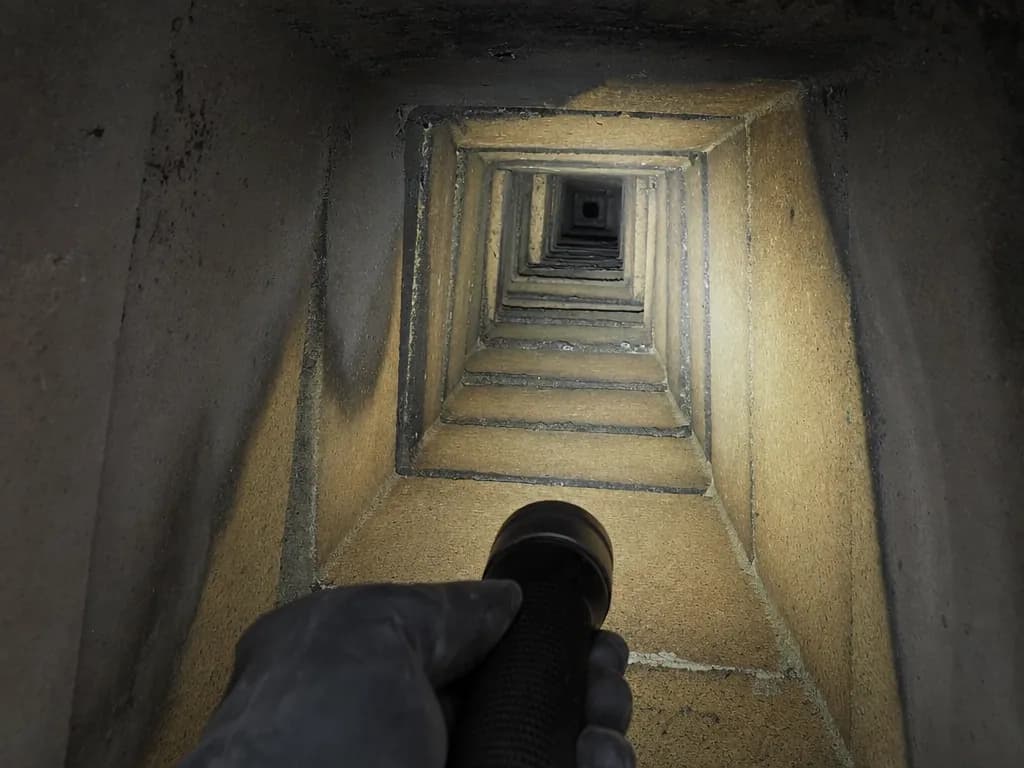
A Level 2 adds accessible attics, crawl spaces and basements and a video scan of the flue. That video scan is the point. It is the only way to see the inside of a liner without taking the chimney apart. CSIA recommends it when the appliance or fuel changes, when the property is sold, before relining, and after a chimney fire, a storm or another event that could have damaged the chimney. See the home sale guide for the buying and selling case.
Level 3
“A Level 3 inspection addresses the proper construction and the condition of concealed portions of the chimney structure and the flue.”
A Level 3 is for hidden hazards. It includes everything in Levels 1 and 2 and removes parts of the chimney or building, such as the crown or a section of interior wall, only where needed to reach the problem. It is rare and is usually ordered after a Level 2 shows something that cannot be assessed from outside.
National price ranges
No cost guide publishes a Rockford price. These are national figures, each with its source and date.
| Job | Range | Source and date |
|---|---|---|
| Sweep | $129 to $381 | Angi, chimney sweep cost, updated July 10, 2026 |
| Level 1 inspection | $160 to $300 | Angi, chimney sweep cost, updated July 10, 2026 |
| Level 2 inspection (camera) | $260 to $460 | Angi, chimney sweep cost, updated July 10, 2026 |
| Level 2, wider range | $200 to $1,000 | Angi, chimney inspection cost, updated October 19, 2026 |
| Level 3 inspection | $500 to $800 | Angi, chimney sweep cost, updated July 10, 2026 |
Angi's inspection guide gives a wider Level 3 range, $500 to $5,000, because parts of the chimney or wall are opened up. All the ranges are on the chimney cost page.
Which one do you need?
- Yearly, nothing changed: a Level 1 inspection, and a sweep if it finds deposits. This is the NFPA 211 routine (how often to sweep).
- New appliance, new fuel, a sale, a chimney fire or storm damage: a Level 2.
- Level 2 found something it cannot reach: a Level 3.
- Fireplace works fine and you only want the soot gone: a sweep, but a sweep alone does not meet the yearly inspection rule.
The Rockford angle
Rockford's housing is old: 22.4% of homes were built before 1940 (Census ACS, 2020 to 2024). Older masonry chimneys are the ones most likely to need the Level 2 look, because the inside of the flue is the part nobody has seen in decades. And since 83.5% of county homes heat with gas, the flue you are inspecting often vents a furnace or water heater where a cracked liner is a carbon monoxide question, not a smoke question.
Quick answers
Is a chimney sweep the same as a chimney cleaning?
In practice, yes in meaning: sweep is the person and the old name, cleaning is the job. Both mean removing soot and creosote. Neither term means an inspection, which is a separate look at the chimney's condition.
Does a chimney sweep include an inspection?
Often a Level 1 look is part of the visit, and Angi notes Level 1 is usually done with a cleaning. A Level 1 does not include a video scan, so ask what the visit covers before you book.
What does a Level 2 chimney inspection include?
Everything in Level 1, plus accessible attics, crawl spaces and basements and a video scan of the flue. CSIA recommends it on a sale, after a fire or when the appliance changes. National prices are on the cost page.
Do I need an inspection if I get my chimney swept every year?
NFPA 211 asks for a yearly inspection, and cleaning only if necessary. A sweep that does not look at the liner and masonry leaves the inspection step undone, so confirm the visit covers a Level 1.
Which is cheaper, a sweep or an inspection?
Nationally the ranges overlap. Angi lists a sweep and a Level 1 inspection close together, and a camera scan costs more. See the cost page for each range with its source and date.
Chimney due for a look?
Tell us what you burn, when the chimney was last swept and anything you have noticed. We reply with a price first.