Signs of a chimney fire and what to do
Updated
Short answer
Part of Creosote Removal.
If a chimney fire is happening now, leave the house and call 911 from outside. Do not stay to look, and do not go back in for anything. The rest of this page is for after the fire and for the quiet kind that nobody notices.
How common they are
NFPA, 2016 to 2020
“Municipal fire departments in the US responded to an estimated annual average of 44,210 home structure fires caused by heating equipment in 2016-2020.”
The U.S. Fire Administration found that fires confined to chimneys, flues or fuel burners were 77% of residential heating fires in 2017 to 2019, and that heating fires peak in January. That is the national picture. Rockford averages 21.8 F in January (National Weather Service), so the peak month is also a month of long fires and a closed-up house. We found no Winnebago County count of chimney fires, so no local figure is given here.
Many of these fires stay inside the flue and go out with little damage. That is why the federal figure is for fires “confined” to chimneys. Confined does not mean harmless: heat can crack a liner or damage masonry that the owner cannot see.
Signs of a chimney fire
- Loud cracking or popping from the chimney.
- A low roaring or rumbling sound.
- Dense smoke from the top of the chimney or into the room.
- A hot, strong smell from the fireplace or stove.
- Flames or sparks coming out of the top.
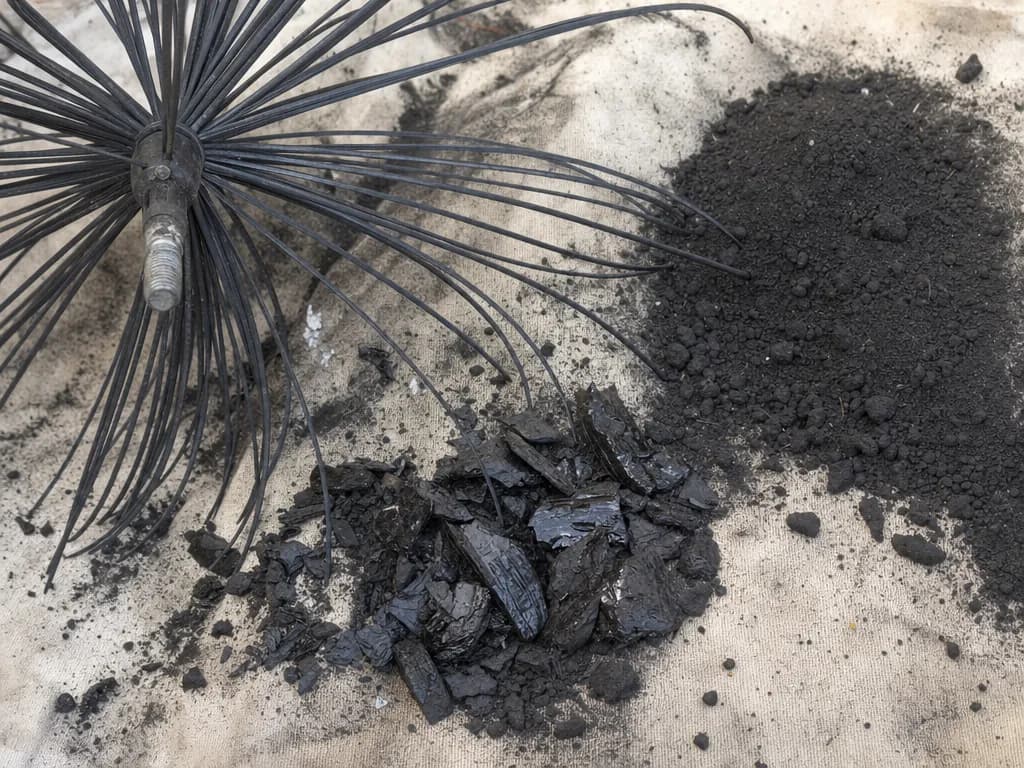
These are the signs people describe after a fire. A slow, smouldering fire can show none of them. The aftermath is what gets noticed: puffy or honeycombed creosote, warped metal parts, cracked or collapsed liner pieces, discoloured or cracked masonry, or debris from the flue in the firebox or on the roof. If you find any of these, treat it as a fire that already happened.
What to do during a fire
- Get everyone out of the house, including pets if it is safe.
- Call 911 from outside. Give the address and say it is a chimney fire.
- Do not go back in. Do not try to put it out from the roof.
- Let the fire department make the house safe and tell you when you can return.
The Rockford Fire Department, the Loves Park Fire Department and the fire protection districts that serve the rest of the county answer 911 calls. Listings are on each service area page.
What to do afterward
CSIA on when a Level 2 is recommended
“A Level Two inspection is recommended when the conditions of use are changing, such as adding a new appliance, or replacing an existing appliance with a dissimilar one (different fuel, efficiency or type)”
CSIA recommends a Level 2 inspection after a chimney or building fire. Do not use the fireplace, stove or flue again until that inspection says it is safe. A Level 2 includes a video scan of the flue, which is how a cracked liner is found. National prices: $260 to $460 (Angi, chimney sweep cost, national, updated July 10, 2026); Angi's inspection guide gives a wider $200 to $1,000. A Level 3 may be ordered if the scan shows damage that cannot be seen without opening the chimney. If the flue vents a furnace or water heater, the same applies: the appliance should not run into a damaged flue. See the chimney cost page for ranges with sources and dates.
Tell your home insurer about the fire. Then get any repair quote in writing. Under the Illinois Home Repair and Remodeling Act, a contractor needs a signed written contract for work over $1,000 (815 ILCS 513/15), and chimney liners are named in the Act.
Prevention
NFPA and EPA name a dirty chimney as the leading factor in home heating fires. NFPA 211 asks for an inspection every year. Burn dry wood: EPA says less than 20 percent moisture. Keep ashes in a lidded metal container at least 10 feet from the house, as the U.S. Fire Administration advises. Read how to remove creosote and how often to sweep.
The creosote removal service page covers cleaning after buildup is found.
Sources: NFPA, Home Heating Fires (2016-2020 data); U.S. Fire Administration, residential heating fires 2017-2019; EPA Burn Wise, fast facts (2016, citing NFPA); CSIA, Level 2 inspection guide (PDF); CSIA, chimney inspection levels; U.S. Fire Administration, fireplace and wood stove safety card (PDF); NFPA 211 (2016 edition), Sec. 14.2 annual inspection; Angi, chimney sweep cost; Angi, chimney inspection cost; EPA Burn Wise, best wood-burning practices; Home Repair and Remodeling Act, 815 ILCS 513/15; Home Repair and Remodeling Act, 815 ILCS 513; National Weather Service, Rockford normals 1991-2020
Quick answers
What does a chimney fire sound like?
People describe loud cracking or popping and a low roaring or rumbling from the flue. Some slow fires make no sound, so look for the aftermath too: puffy creosote, warped metal or cracked liner pieces.
What should I do if my chimney is on fire?
Get everyone out and call 911 from outside. Do not stay to watch and do not go back in. Let the fire department make the house safe.
Can I use my fireplace after a chimney fire?
Not until a Level 2 inspection clears it. CSIA recommends a Level 2 after a chimney or building fire, because a video scan can find cracked liner sections that the eye cannot see.
How do I know if I had a chimney fire I did not notice?
An inspector looks for puffy or honeycombed creosote, warped metal, cracked liner pieces and damaged masonry. A Level 2 inspection includes the video scan. National prices are on the cost page.
How common are chimney fires?
The U.S. Fire Administration found fires confined to chimneys, flues or fuel burners were most residential heating fires in 2017 to 2019, with a peak in January. No Winnebago County count was found.
Chimney due for a look?
Tell us what you burn, when the chimney was last swept and anything you have noticed. We reply with a price first.