Illinois Carbon Monoxide Alarm Law: What Homeowners Need
Updated
Short answer
Part of Gas Fireplace Service.
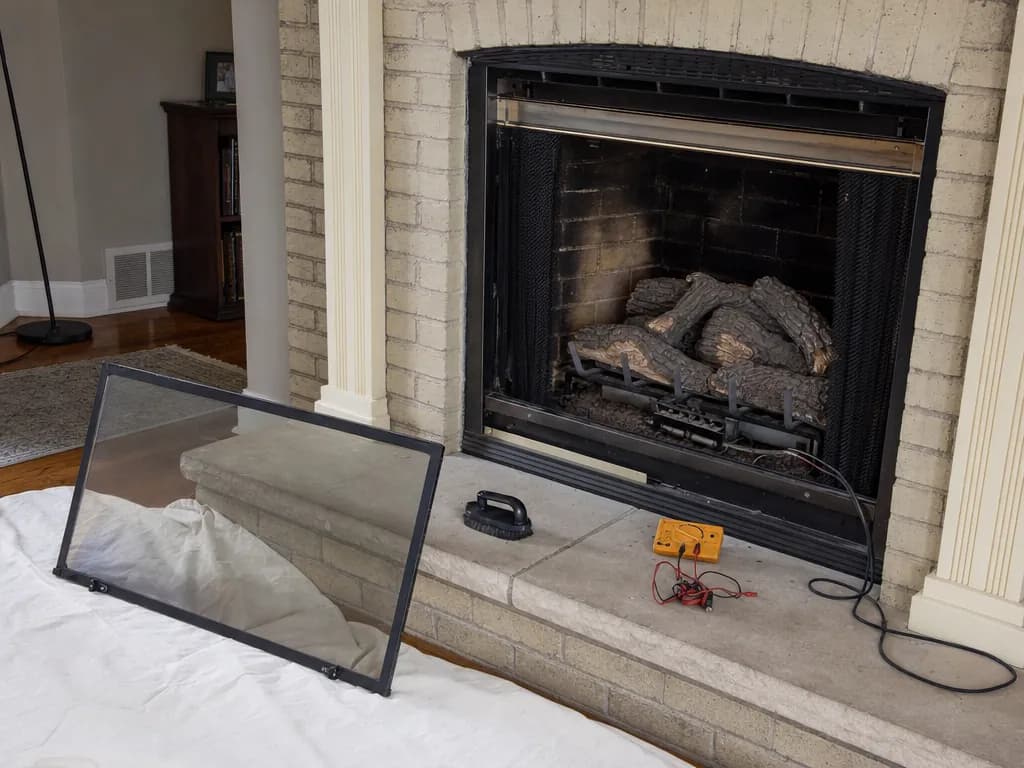
Carbon monoxide (CO) has no smell or color. It comes from burning fuel without enough air or with a blocked vent, and a chimney or flue that is cracked, blocked or poorly sized can let it into the house. The Consumer Product Safety Commission says heating equipment is a leading source of CO deaths. Illinois has a law that requires alarms in homes. This guide explains it and how it connects to your chimney. The gas side of it is on our gas fireplace service page.
What the law requires
The Carbon Monoxide Alarm Detector Act (430 ILCS 135) puts the rule in section 10:
“Every dwelling unit shall be equipped with at least one approved carbon monoxide alarm in an operating condition within 15 feet of every room used for sleeping purposes.”
That is one working alarm within 15 feet of every sleeping room. If the sleeping rooms are on different floors or in separate areas, each needs an alarm within reach. The law has applied since January 1, 2007.
Which homes it covers
The statute text we read has no fuel condition in section 10 itself. The Illinois State Fire Marshal explains the scope on its page:
“As of January 1, 2007, homeowners, landlords, and building owners are required to install carbon monoxide (CO) detectors within 15 feet of rooms used for sleeping. This law applies only to those occupancies that use fossil fuel to cook, heat, or produce hot water, or occupancies that are connected to an enclosed garage.”
In Winnebago County that is nearly every home. The Census (ACS 2020-2024) says 83.5% of occupied homes in the county heat with utility gas, and 82.4% in Rockford. A gas furnace, a gas water heater, a gas range or a gas fireplace counts as fossil fuel. An attached garage counts too.
A wood fireplace is not named. Only 169 homes in the county use wood as their main heat (ACS 2020-2024), and the Fire Marshal's page does not say a wood fireplace alone triggers the law. If you have only a wood fireplace and no gas appliance or attached garage, the law may not require an alarm, but an alarm is still sensible, because a blocked flue or a smoldering fire can produce CO. We also did not retrieve section 15 of the Act, which may carry exceptions, so ask your fire department or the Fire Marshal's office about an unusual case.
What kind of alarm
“The carbon monoxide alarms required under this Act may be either battery powered, plug-in with battery back-up, or wired into the structure's AC power line with secondary battery back-up.”
Battery-powered, plug-in with battery backup, and hardwired with battery backup all qualify. A combined smoke and CO alarm is allowed if it sounds a different signal for each hazard (430 ILCS 135/10(d)). Check the replacement date printed on the alarm, since sensors wear out.
Who is responsible: owner and tenant
The owner supplies and installs the alarms. A tenant tests them, replaces batteries and tells the owner in writing about problems the tenant cannot fix. The owner makes sure the batteries work when a tenant moves in. If you are a landlord with a gas furnace in a rental, the alarms are yours to supply. We did not retrieve the statute's penalty provisions, so we do not state a fine.
Where the alarms go in a typical house
The law counts rooms used for sleeping, so the count follows how you use the house, not how many bedrooms it was built with. A hallway alarm that is within 15 feet of every bedroom door covers a small ranch. A two-story house with bedrooms upstairs needs an alarm up there. A finished basement with a bed in it is a sleeping room, and so is a first-floor den that someone sleeps in. Measure from the alarm to the door, and add another alarm if any sleeping room is farther away. Keep the alarm away from the stove, furnace and water heater itself so that cooking fumes do not set it off. Test it on a schedule. The law makes the tenant responsible for testing in a rental, and an owner-occupant should do the same.
This is also where an attached garage matters. A car running in a garage under a bedroom is a known source of CO in houses, and the Fire Marshal's description names homes connected to an enclosed garage for that reason. A gas dryer, a gas range and a gas fireplace count as fossil fuel appliances too.
Alarms do not replace chimney care
An alarm warns you after CO is in the house. A clear flue keeps it out. Most chimneys in Rockford vent a gas furnace or water heater, and the national standard for chimneys (NFPA 211, 2016 edition) says chimneys, fireplaces and vents get inspected at least once a year. The CPSC says to schedule a yearly professional inspection of all fuel-burning heating systems, including chimneys, flues and vents. Nicor Gas, the area's gas utility, says to have gas appliances cleaned or inspected once a year by a certified contractor, and that a yellow or orange flame can mean poor combustion or venting.
Things that deserve a call:
- A CO alarm that sounds with the furnace or water heater running.
- Soot, rust or moisture stains around a furnace, water heater or draft hood.
- A gas fireplace with a yellow or orange flame, or a smell when it runs.
- A chimney that was relined or changed after an appliance swap. A new, higher-efficiency furnace on an old flue is a common cause; see furnace and water heater chimney liners.
If an alarm sounds, get everyone outside, call 911 and do not go back in. Then have the system checked before you use it again. Angi lists $80 to $130 for gas fireplace service (national, July 10, 2026) and $160 to $300 for a Level 1 inspection. The cost page shows every source. See also does a gas fireplace need to be cleaned and, for the chimney itself, chimney inspections.
Sources: Carbon Monoxide Alarm Detector Act, 430 ILCS 135/10; Illinois State Fire Marshal, carbon monoxide detectors; CPSC, home heating equipment and carbon monoxide; Nicor Gas, safety precautions; NFPA 211 (2016 edition), Sec. 14.2 annual inspection; U.S. Census Bureau, ACS 2020-2024 5-year, via Census Reporter; Angi, chimney sweep cost; HomeGuide, chimney sweep cost
Quick answers
Where do carbon monoxide alarms go under Illinois law?
At least one approved alarm in working condition within 15 feet of every room used for sleeping. The Carbon Monoxide Alarm Detector Act has required this since January 1, 2007.
Does a wood-burning fireplace trigger the Illinois CO alarm law?
The State Fire Marshal says the law applies to homes that use fossil fuel to cook, heat or make hot water, or that connect to an enclosed garage. A wood fireplace is not named. Most homes with a gas appliance or attached garage are covered anyway.
Does a gas fireplace need a CO alarm?
A gas fireplace burns natural gas or propane, which are fossil fuels, so a home with one falls under the Fire Marshal's description. Put an alarm within 15 feet of every sleeping room, and have the fireplace serviced once a year.
What kind of CO alarm does Illinois allow?
Battery-powered, plug-in with battery backup, or wired into the house power with a battery backup are all allowed. A combined smoke and CO unit is allowed if it sounds a different signal for each hazard.
Who installs CO alarms in a rental?
The owner supplies and installs them. The tenant tests them, changes batteries and reports problems in writing. The owner makes sure the batteries work when a new tenant moves in.
How much does a gas fireplace service visit cost?
Angi lists $80 to $130 and HomeGuide lists $80 to $150 (national, updated July 10, 2026 and February 9, 2026). No guide gives a Rockford price. The cost page has the sources.
Chimney due for a look?
Tell us what you burn, when the chimney was last swept and anything you have noticed. We reply with a price first.