
Signs Your Dryer Vent Is Clogged (and What to Do)
Updated
Short answer
Part of Dryer Vent Cleaning.
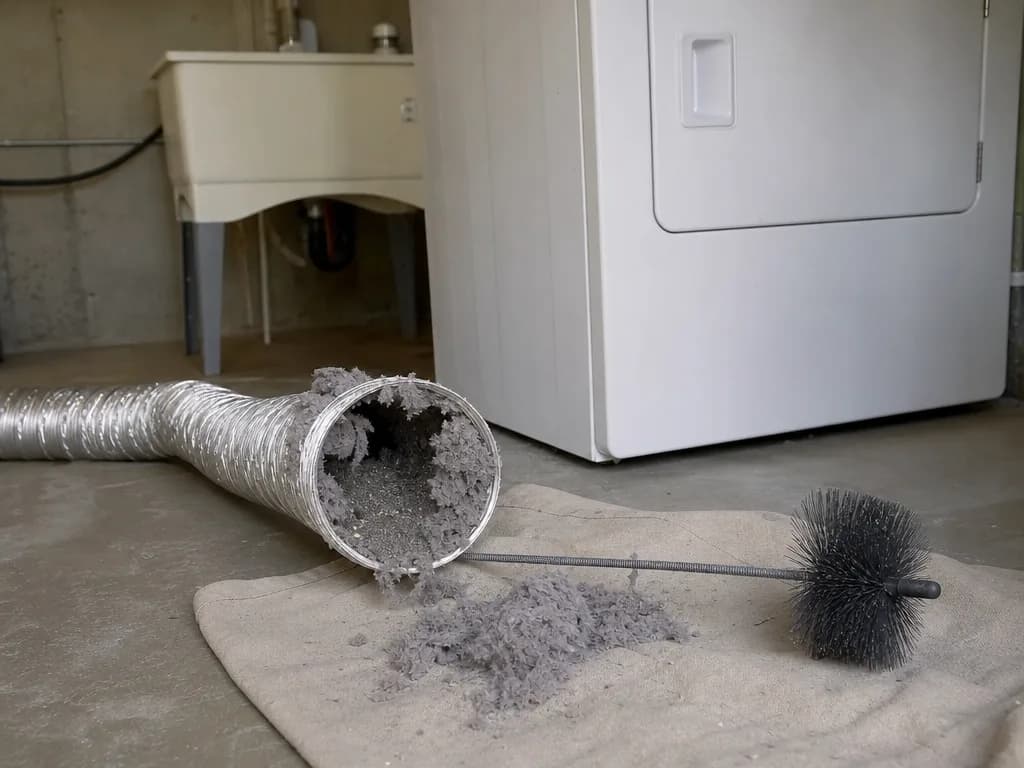
If your dryer needs two cycles to finish a load, the vent is the first thing to rule in or out. It is not the only cause, and the sources below are careful to say so. This guide lists the signs, the check you can do in a minute at the outside wall, what to do with the result, and the other things that make a dryer slow. Our dryer vent cleaning page covers the service.
The signs, in the sources’ own words
CPSC, Publication 5022
“If clothing is still damp at the end of a typical drying cycle or drying requires longer times than normal, this may be a sign that the lint screen or the exhaust duct is blocked.”
Samsung
“If your dryer is heating but the clothes are still damp, then your vent is probably blocked. If your dryer has weak heat and runs for a long time, this could also indicate a blocked vent.”
Whirlpool
“If you notice that your clothes are taking longer to dry, the dryer has become hot to the touch, or a burning scent is present in your laundry room, your dryer vent may be clogged and the vent will need to be cleaned.”
Note the wording. The CPSC says “may be a sign” and lists the lint screen along with the duct. Samsung says “probably.” GE describes the same cluster, a dryer that is hot to the touch, sweats and takes longer to dry, and says a partly clogged exhaust “can impair performance.” Whirlpool adds that visible damage to the duct is a sign the duct itself needs replacing.
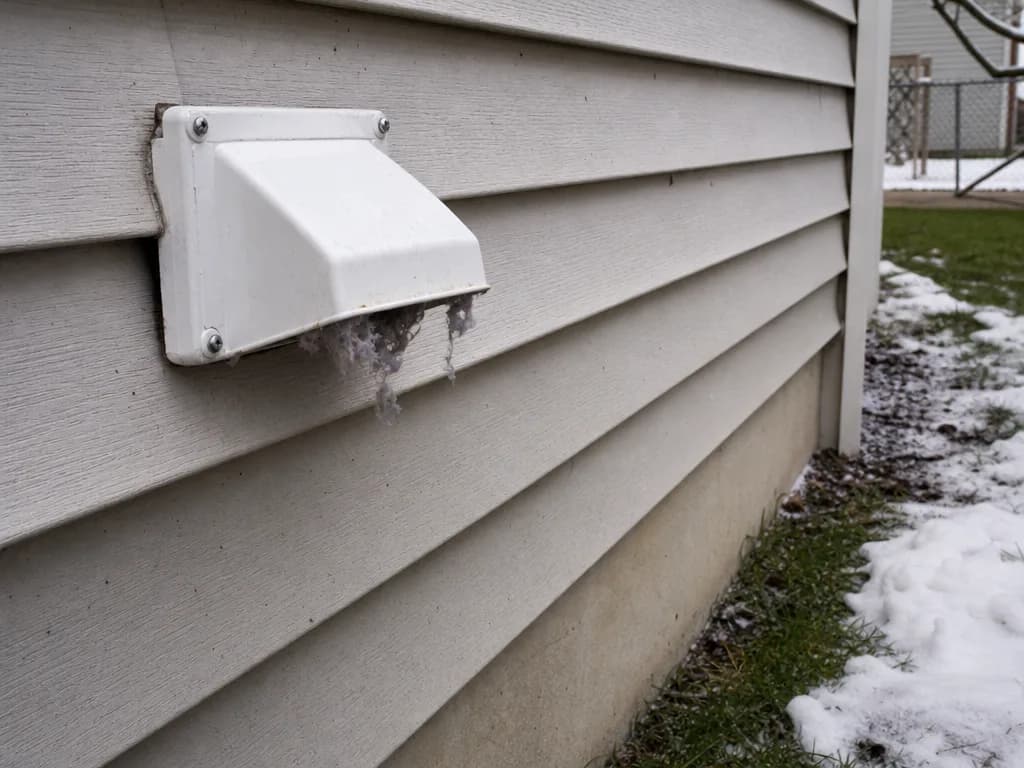
The outside flap check
The CPSC gives this test: “Check the outside dryer vent while the dryer is operating to make sure exhaust air is escaping. If it is not, the vent or the exhaust duct may be blocked.” The U.S. Fire Administration words it as making sure “the outdoor vent covering opens when the dryer is operating.”
- Start the dryer on a heated cycle with a load in it.
- Go outside to the vent cap on the wall. Find it from inside by following the duct, or from outside by looking for the small hood or louvered cover.
- Hold your hand near the opening. You should feel warm, moist air, and the flap should be pushed open.
- Look at the cap itself. GE says snow or ice should not be allowed to build up around it, and the U.S. Fire Administration says to check that nests of small animals and insects are not blocking it. An energy.gov-hosted article adds that birds or rodents sometimes block dryer vents.
Little or no air with the dryer running points to a blockage somewhere between the drum and the cap. A strong flow does not clear the rest of the system, but it makes a full-length clog less likely.
Rockford’s January average is 21.8 degrees F (National Weather Service, Rockford normals 1991-2020, 1991 to 2020), so the outside cap is worth a look after snow. Nicor Gas, in its customer safety insert, says snow or ice covering the outside venting of a furnace, water heater or clothes dryer “can cause hazardous buildup of carbon monoxide.” It asks you to clear snow with your hands or a broom, not a shovel or mechanical equipment.
Samsung’s vent blockage test and Whirlpool’s Check Vent light
Some dryers will tell you. Samsung describes a blockage test on certain models: “A code like C8 or C80 indicates about 80% clogged, and a code like C90 or C9 indicates about 90% clogged.” It is model specific, so look in your manual before you rely on it (Samsung, Run a Vent Blockage test on your Samsung dryer).
Whirlpool’s Check Vent light page tells you to check that the vent hood on the outside is not clogged or blocked by landscaping, then to clean the venting inside the house, which “may require a Vent Cleaning service person, depending on the venting.” The page says the venting needs cleaning every one to two years, or as needed when drying performance drops.
What to do next
- Clean the lint screen and rerun a load. The CPSC says to do this before or after every load.
- Do the flap check above.
- Look at the duct behind the dryer if you can pull it out safely. The CPSC says the duct should not be crushed or kinked, and says to replace foil or plastic accordion duct with rigid or corrugated semi-rigid metal.
- Clear the blockage or hire it out. The CPSC says it may be necessary to disconnect the duct from the dryer and to “reconnect the ducting to the dryer and outside vent before using the dryer again.” Pros and cons of doing this yourself are in can you clean a dryer vent yourself.
If you hire it, the price is a national figure, since no guide publishes one for Rockford. Angi lists $104 to $188 (updated October 14, 2026) and Thumbtack $186 to $510. The cost page has the sources and the extra charges for a nest or a damaged duct.
When it is not the vent
- The lint screen. A screen that is full, or coated in a film, cuts airflow before the air reaches the vent. The CPSC lists the screen in the same sentence as the duct.
- The inside of the dryer. The CPSC says to clean behind the dryer and to “have a qualified service person clean the interior of the dryer chassis periodically.” A clean vent does not clean the cabinet.
- A crushed transfer hose. Samsung lists a crushed hose among other causes of damp loads. So do the CPSC’s remarks on kinks and crushing.
- Dryer sheet residue on the sensor bars. Samsung lists this as another cause on its not-drying page.
- A cold laundry area. GE says the dryer should be used in a heated location, because in an unheated one “particularly in the cooler months” it can sweat.
GE also notes that venting problems are not considered a manufacturing defect and are not covered by the warranty. Knowing the cause before you call a repair service can save a visit.
Gas dryers: when to stop
A gas dryer exhausts combustion gases as well as moisture. The International Residential Code says a gas dryer’s exhaust must “convey the moisture and any products of combustion to the outside of the building.” GE warns: “Do not operate a gas dryer without the vent; possible carbon monoxide fumes could enter the room around the dryer.” That is why the disconnect-and-test step that appears in some electric-dryer troubleshooting is not for a gas model.
The Illinois Office of the State Fire Marshal lists dryers among the appliances that can produce carbon monoxide when faulty or poorly repaired. If you smell gas or a carbon monoxide alarm sounds, stop using the dryer and have the appliance and its vent checked before you run it again. Illinois law requires an alarm near sleeping rooms: Every dwelling unit needs at least one working carbon monoxide alarm within 15 feet of every room used for sleeping, required since January 1, 2007. The State Fire Marshal says the law applies to homes that burn fossil fuel (natural gas included) to cook, heat or make hot water, or that have an attached garage. A wood fireplace alone is not named. See the Illinois carbon monoxide alarm law.
NFPA found that gas dryers appear in fires at about the rate they are used. Of the dryers in home fires in its 2014 to 2018 data, 78 percent were electric and 22 percent were gas, which NFPA calls generally consistent with usage. Gas dryers are not riskier for fire on those numbers. The carbon monoxide point is a separate question.
Sources: CPSC, Overheated Clothes Dryers Can Cause Fires (Publication 5022); USFA, Clothes Dryer Fires in Residential Buildings (2008 to 2010); Samsung, Clothes are not dry after using Samsung dryer; Samsung, How to clean your Samsung dryer; Whirlpool, How to clean a dryer vent; Whirlpool Product Help, Check Vent light; GE Appliances, Dryer hot to the touch or sweats; Nicor Gas, customer safety insert; Illinois Office of the State Fire Marshal, carbon monoxide warning; ICC, 2021 International Residential Code, Chapter 24 Fuel Gas; NFPA, Home Dryer Fires (Index No. 3029); Illinois State Fire Marshal, carbon monoxide detectors; Angi, dryer vent cleaning cost; Thumbtack, dryer vent cleaning cost; Samsung, Run a Vent Blockage test on your Samsung dryer; Energy.gov-hosted article, Dryer Venting
Quick answers
Why does my dryer take two cycles to dry a load?
The Consumer Product Safety Commission says damp clothes after a typical cycle, or longer drying times, may be a sign that the lint screen or the exhaust duct is blocked. Samsung says a dryer that heats but leaves clothes damp probably has a blocked vent.
How do I check my dryer vent from the outside?
Run the dryer and go to the outside cap. The CPSC says to check that exhaust air is escaping. If the flap does not open and you feel no air, the vent or the duct may be blocked.
Is a hot dryer a sign of a clogged vent?
Whirlpool lists a dryer that is hot to the touch, longer drying times and a burning scent as signs your vent may be clogged. GE describes the same set. Either can also come from other causes, so check the lint screen and the outside cap too.
What if the vent is clear and the dryer is still slow?
Look at the lint screen, the transfer hose behind the dryer and the dryer's inside. The CPSC says a qualified service person should clean the interior of the dryer chassis periodically. Venting faults are not covered by GE's warranty.
What should I do if I smell gas near a gas dryer?
Stop using the dryer and have it checked before you run it again. GE warns that running a gas dryer without its vent can let carbon monoxide fumes into the room, and Illinois requires carbon monoxide alarms near sleeping rooms.
How much does it cost to fix a clogged dryer vent?
Angi lists $104 to $188 for a cleaning and Thumbtack $186 to $510, both national figures with no Rockford split. Replacing a damaged duct is priced separately on the cost page.
Chimney due for a look?
Tell us what you burn, when the chimney was last swept and anything you have noticed. We reply with a price first.